Explore Kobe Bryant Rookie Card Upper Deck: 1996-97, #58, 267, Value, Rarity & More
The 1996-97 Upper Deck Kobe Bryant #58 rookie card is one of the most recognizable and most affordable cards from his rookie class. A raw copy typically runs under $50, a PSA 9 usually lands in the $80–$150 range, and a PSA 10 gem mint has traded for roughly $560–$900 in recent sales.
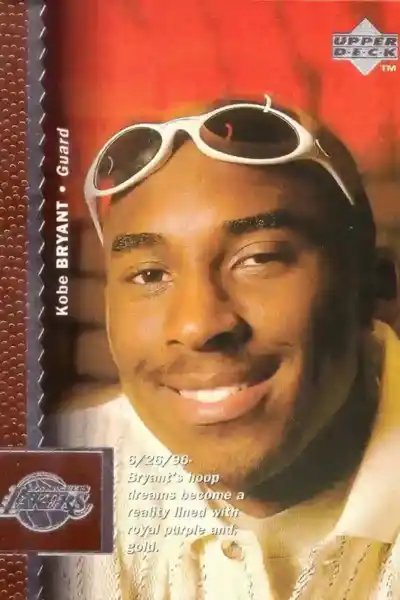
1996-97 Kobe Bryant Rookie Card Upper Deck #58
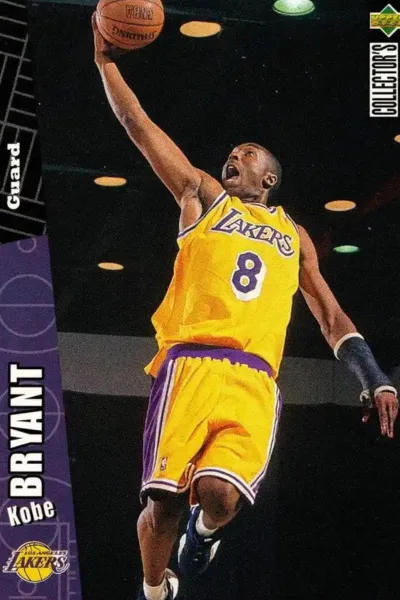
1996-97 Upper Deck Basketball #267 Kobe Bryant Rookie Card
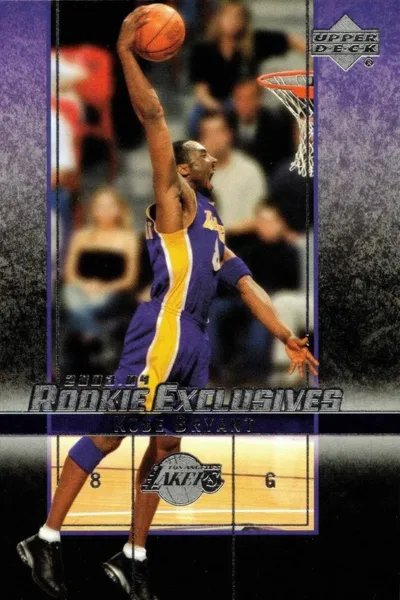
2003-04 Upper Deck Rookie #59 Kobe Basketball Card
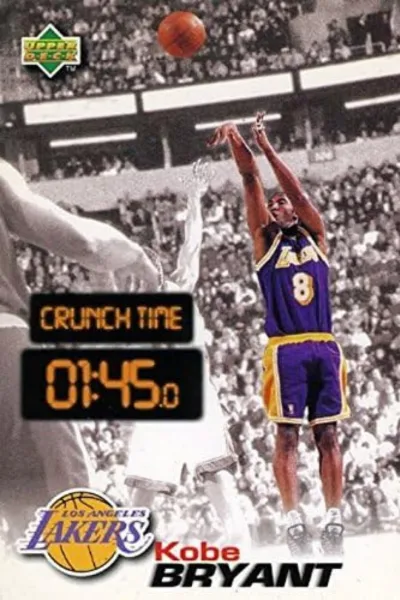
Kobe Bryant 199697 Upper Deck Nestle #CT22 ROOKIE Card
What Is the Kobe Bryant Upper Deck Rookie Card?
Kobe Bryant was drafted 13th overall by the Charlotte Hornets in 1996 and traded to the Los Angeles Lakers before he ever played a game for Charlotte. That off-season trade is why every card from his 1996-97 rookie class — including this one — shows him in a Lakers uniform despite being drafted by Charlotte.
Upper Deck released its base rookie card of Kobe as card #58 in the 1996-97 Upper Deck Series 1 basketball set. The front features a tight portrait shot of Kobe with a basketball graphic running down the side, plus a short paragraph describing his draft background. It’s part of a rookie class that also includes stars like Allen Iverson, Steve Nash, and Ray Allen — widely considered one of the deepest draft classes in NBA card history.
Upper Deck also produced several other Kobe cards that year, which is a common source of confusion for new collectors. The base #58 is the one most people mean when they search “Kobe Bryant Upper Deck rookie card,” but it’s not the only Upper Deck Kobe card from 1996.
Upper Deck Kobe Bryant Cards From 1996-97 at a Glance
| Card | Set/Insert | Notes |
|---|---|---|
| #58 Base Rookie | Upper Deck Series 1 | The standard, most-collected version |
| Rookie Exclusives | Upper Deck insert | Short-printed insert, harder to find |
| UD3 #19 | Upper Deck UD3 | Futuristic die-cut-style design, part of the “Hardwood Prospects” theme |
| Collector’s Choice #267 | UD Collector’s Choice | Upper Deck’s budget-tier product; the cheapest way to own a Kobe rookie |
If you’re not sure which one you have, check the card number and the set name printed on the back — that’s the fastest way to confirm you’re looking at the base #58 versus an insert or lower-tier parallel.
How Much Is the Kobe Bryant Upper Deck Rookie Card Worth?
Value depends almost entirely on grade. Here’s a snapshot of where the market has generally sat based on recent completed sales:
| Grade | Typical Value Range |
|---|---|
| Raw (ungraded) | $20–$50 |
| PSA 8 | $40–$90 |
| PSA 9 | $80–$150 |
| PSA 10 (Gem Mint) | $560–$900+ |
Key takeaway: The jump from PSA 9 to PSA 10 is where the real money is. That’s because gem-mint copies are much harder to find than the overall population suggests — centering issues and edge wear from 1990s printing and pack-handling knock a lot of copies down to an 8 or 9.
A few things move the price up or down within those ranges:
- Recent sale timing. Card values move with the broader sports card market, so a card that sold for $700 six months ago could be worth more or less today.
- Certification number history. Cards with a clean, documented sale history (especially through major auction houses) tend to command a premium.
- Centering. This card is known for being centered slightly off on a meaningful share of the print run, which is the single biggest reason copies miss PSA 10.
- Corners and surface. Upper Deck’s cardstock from this era shows corner wear easily, so sharp corners matter more than they might on a modern card.
If you want a live number rather than a range, check a card-price tracking site (see the Sources section below) and search “1996 Upper Deck Kobe Bryant #58” prices update as new sales complete, so a snapshot here will drift over time.
Is the Upper Deck Kobe Bryant Card His “True” Rookie Card?
Yes — and this trips people up constantly. Kobe doesn’t have a single “true” rookie card the way some players do. Because he entered the league in 1996-97, every card issued that season by any licensed manufacturer — Topps, Topps Chrome, Fleer, SkyBox, Upper Deck, Score Board, Bowman’s Best, and others — carries the official “RC” (Rookie Card) designation. The Upper Deck #58 is just as legitimate a rookie card as the far pricier Topps Chrome #138.
What separates the cards isn’t legitimacy — it’s scarcity, brand prestige, and design appeal. Topps Chrome became the “holy grail” largely because of its refractor technology and lower survival rate in top grades, not because it’s somehow more official.
How the Upper Deck Rookie Compares to Kobe’s Other 1996-97 Rookies
Collectors almost always end up comparing the Upper Deck card to Topps Chrome, since those are the two most commonly searched Kobe rookies. Here’s how they stack up:
| Feature | Upper Deck #58 | Topps Chrome #138 |
|---|---|---|
| Typical raw price | $20–$50 | Several hundred dollars and up |
| PSA 9 price | $80–$150 | Roughly $2,000–$3,000+ |
| PSA 10 price | $560–$900+ | Can reach five figures; refractor parallels have sold for six and seven figures at peak auctions |
| Design | Portrait shot with basketball side graphic | Chrome-finish photo card, refractor parallel available |
| Best for | Budget-conscious collectors, set builders, first-time buyers | Investment-grade collecting, high-end display pieces |
Other notable 1996-97 Kobe rookies worth knowing about: the SkyBox E-X2000 Credentials card (very limited print run), the Fleer and SkyBox Premium base rookies (popular, moderately priced), the Finest set (bronze base with a scarcer gold “Heir” parallel), and UD Collector’s Choice #267 (the cheapest way to own any Kobe rookie card, often available for under $50 raw).
If you’re building a full Kobe rookie run, the Upper Deck #58 and Collector’s Choice #267 are typically the two easiest and most affordable pieces to add early.
How to Tell If Your Upper Deck Kobe Bryant Card Is Authentic
Counterfeits are a real issue with high-demand 1990s rookie cards, and Kobe’s are among the most reprinted. Before you buy — especially raw, ungraded copies from marketplaces — check these basics:
- Card stock and thickness. Genuine 1996-97 Upper Deck cards have a specific stock weight and a slightly glossy finish. Reprints often feel thinner or noticeably glossier.
- Back-of-card printing. Compare fine print, copyright text, and card-number placement against verified images from a grading company’s card-facts database.
- Color and sharpness. Counterfeits frequently show slightly off colors or soft, blurry printing under magnification.
- Buy graded when possible. A PSA, BGS, or SGC slab with a verifiable certification number is the single best protection against buying a fake, since you can look up the cert number directly on the grading company’s site.
- Be cautious with “too good to be true” raw listings, particularly for cards advertised as gem mint condition at bargain prices.
Should You Get It Graded?
If your raw copy looks sharp — centered within roughly 60/40 or better, clean corners, no surface scratches — grading can be worth it, since the price jump from raw to PSA 9 or PSA 10 is significant relative to grading fees. If there’s visible wear, rounded corners, or you can already tell centering is off, it’s usually not worth the grading cost, since it will likely come back as a PSA 7 or lower, where the card’s value barely moves.
Quick self-check before you submit a card for grading:
- Hold it up to a light and check all four corners for whitening or fraying.
- Look at the borders on all sides to eyeball centering.
- Check the surface at an angle for scratches or print lines.
- If it passes all three, it’s a reasonable grading candidate.
Where to Buy a Kobe Bryant Upper Deck Rookie Card
- Graded copies: Look for listings on major card marketplaces that show a verifiable PSA, BGS, or SGC certification number you can cross-check.
- Raw copies: Reputable sports card shops and established sellers with strong feedback histories are safer than anonymous marketplace listings.
- Auction houses: For high-grade copies (PSA 10), auction houses with authentication guarantees are the safest route, though they typically carry buyer’s premiums.
Common Mistakes Collectors Make With This Card
- Assuming it’s Kobe’s only rookie card. He has dozens across different brands and inserts from 1996-97.
- Confusing the base #58 with UD3 or Rookie Exclusives inserts. These are different cards with different values.
- Overpaying for raw “gem mint” claims. Without third-party grading, condition claims are subjective — always assume a raw card could grade lower than described.
- Ignoring centering before submitting for grading. It’s the most common reason this specific card misses a PSA 10.
Myth vs. Fact
Myth: “The Upper Deck card isn’t a real rookie card because Kobe was drafted by Charlotte.” Fact: Every 1996-97 card of Kobe carries official rookie card status, regardless of which team is pictured, because “rookie card” refers to the season a player’s first licensed cards were released — not the team on the front.
Myth: “Cheaper rookie cards aren’t worth collecting.” Fact: Affordable rookies like the Upper Deck #58 are exactly what let new collectors start a Kobe collection without a five-figure budget, and high-grade copies can still appreciate meaningfully over time.
Key Takeaways
- The Upper Deck #58 is an official Kobe Bryant rookie card, just like every other 1996-97 issue — it’s simply more affordable than cards like Topps Chrome.
- Value scales steeply by grade: expect roughly $20–$50 raw, $80–$150 for a PSA 9, and $560–$900+ for a PSA 10, though prices shift with the broader market.
- Centering is the card’s biggest grading obstacle, so inspect it closely before submitting.
- Buying graded, or at minimum verifying a seller’s authenticity guarantees, is the safest way to purchase — counterfeits exist across nearly every valuable 1996-97 Kobe rookie.
FAQs
Is the Upper Deck Kobe Bryant card his rookie card?
Yes. It’s one of dozens of officially licensed rookie cards issued during Kobe’s 1996-97 rookie season.
What is card #58 worth in raw condition?
Typically in the $20–$50 range, though condition and current market demand can push that higher or lower.
What is a PSA 10 Upper Deck Kobe Bryant card worth?
Recent completed sales have generally landed in the $560–$900+ range, though this fluctuates with market conditions.
Why is Topps Chrome worth so much more than Upper Deck?
Topps Chrome’s refractor technology, tougher-to-achieve high grades, and status as the “holy grail” of the class drive significantly higher demand and pricing.
Are there other Kobe Bryant cards in the 1996-97 Upper Deck set?
Yes — including the Rookie Exclusives insert, the UD3 #19 card, and the budget-tier Collector’s Choice #267.
How do I know if my card is a counterfeit?
Compare card stock, printing sharpness, and back-of-card details against verified reference images, and prioritize buying graded copies with a checkable certification number.
Should I grade my raw Upper Deck Kobe Bryant card?
Only if it looks sharp — solid centering, clean corners, and no surface flaws. Otherwise, grading fees may not be worth it.
What’s the cheapest way to own a Kobe Bryant rookie card?
The Upper Deck Collector’s Choice #267 is generally considered the most affordable Kobe rookie, often available for under $50 raw.
Does card condition affect price as much as grade?
Grade is the primary price driver since it standardizes condition, but even within a single grade, cards with strong eye appeal and clean cert histories can sell at a premium.
Is this card a good investment?
It can be a reasonable, low-cost way to own a piece of Kobe’s rookie class, though like any collectible, values can rise or fall with market sentiment — it shouldn’t be treated as a guaranteed investment.
Where can I check current prices?
Card-price tracking sites that pull from completed sales (rather than asking prices) give the most accurate real-time picture.
What’s the difference between the base card and the Rookie Exclusives insert?
The base #58 was included in standard packs; Rookie Exclusives was a separate, shorter-printed insert set, which generally makes it scarcer and pricier.